How to Run a Mini Golf Tournament at Home or at Work

A mini golf tournament turns an ordinary gathering into an event. It works for birthday parties, office socials, family reunions and fundraisers, and it scales from four players on a living-room course to dozens on a garden layout. The secret is not the course; it is the organisation. A clear format, fair handicaps and a quick pace keep everyone engaged. Here is how to plan and run one.
Choose a format
The right format depends on how many people are playing and how much time you have.
| Format | Players | How it works | Best when |
|---|---|---|---|
| Stroke play | Any | Everyone plays the course; lowest total wins | You have one course and a relaxed timeline |
| Match play bracket | 4, 8 or 16 | Head-to-head, hole by hole; winners advance | You want drama and a final |
| Team scramble | Teams of 2 to 4 | Best ball each shot, team score | Mixed abilities, office events |
| Round robin | 4 to 6 | Everyone plays everyone over short matches | Small groups with time to spare |
| Qualifier + final | 8+ | Stroke-play round, then top scorers play a final | Larger events with a clear climax |
For most home events, a stroke-play qualifier followed by a short final among the top two or four players works beautifully. Everyone gets a full round, and the event ends on a high with the whole crowd watching.
Handicaps that level the field
Handicaps give newcomers and kids a genuine chance. Keep them simple:
- Stroke allowance. Players take a set number of strokes off their total. Base it on age or on a quick practice round.
- Forward tees. Beginners and children start from a spot closer to the cup.
- Mulligans. Each beginner gets a couple of do-overs to use whenever they want. Selling extra mulligans is a popular fundraiser trick.
- Handedness. Strong players must putt with their weaker hand on certain holes.
Announce the handicaps before play starts and write them on the scoreboard so nobody feels anything was decided afterwards.
Scorekeeping and brackets
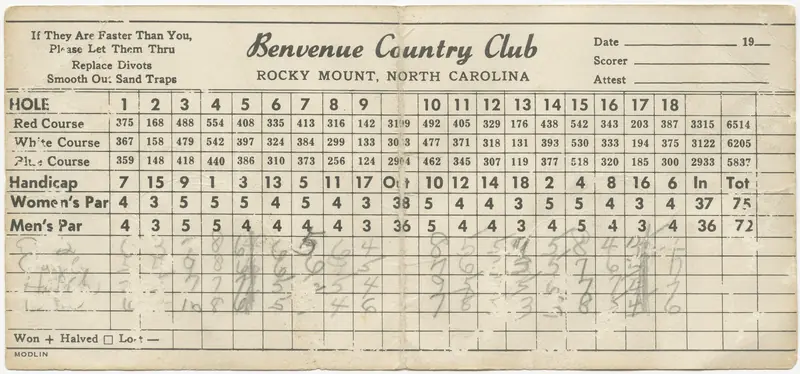
Appoint one scorekeeper per group, and a central scoreboard where totals go at the end of each round. A big sheet of paper, a whiteboard or a shared spreadsheet on a laptop all work. Pre-print or hand-draw scorecards with each hole, par and space for every player.
For brackets, seed players by qualifier score so the strongest do not meet in round one. Draw the bracket large and fill it in as matches finish; watching names move across it builds excitement. Decide tie-breakers in advance. Sudden death on a designated hole is the quickest.
Timing and run-of-show
A mini golf tournament can drag if nobody manages time. Estimate how long a group takes to play the course once by running it yourself with friends, then add a buffer. Use a shotgun start when you have enough holes: each group begins on a different hole at the same time, so everyone finishes together.
- Arrival: sign-in, handicaps assigned, groups announced.
- Briefing: rules, stroke limit, tie-breaker and safety reminders in two minutes.
- Qualifying round: shotgun start, scorecards returned to the scoreboard.
- Break: food and drinks while totals are added up.
- Finals: top players play one or three showcase holes with everyone watching.
- Awards: trophy, silly prizes and a group photo.
Prizes and awards
A homemade trophy is often more treasured than a bought one. Spray-paint a plastic cup gold and glue it to a block of wood, or mount an old golf ball on a stand. Beyond first place, give out awards that reward personality: most creative miss, best outfit, most holes-in-one, best sportsmanship, and "closest to a hole-in-one without actually getting one". These keep lower scorers invested right to the end.
Running it at work or as a fundraiser
For office events, mixed-department teams in a scramble format help people meet colleagues. Keep it inclusive: make sure the course is accessible, avoid features requiring kneeling or climbing, and offer a non-playing role, such as scoreboard captain or hole marshal, for anyone who prefers not to putt.
For fundraisers, common ideas include an entry fee per team, "buy a mulligan" tokens, and a hole sponsored by a local business or family. If you are raising money for a registered charity, check any local rules on raffles and prize draws before including them.
If you are building the course yourself, read how to design a great mini golf hole first, and brush up on rules and etiquette so your briefing is clear. For variations between rounds, borrow a few ideas from our party games list.
Frequently asked questions
How many holes do I need for a tournament?
Six to nine holes work well for home events. With a shotgun start, having at least as many holes as groups keeps everyone moving.
What is the fairest tournament format for mixed abilities?
A team scramble, because the best shot is used every time and nobody's weaker putts hurt the team.
How long does a home mini golf tournament take?
It depends on group size and course length. Test the course beforehand, then plan the qualifier, a break and the finals with some buffer.
Do I need prizes?
Not necessarily, but a homemade trophy and a few silly awards add a lot of fun for very little cost.
Play safe: swing low near people, pets and windows, and follow any posted course rules.