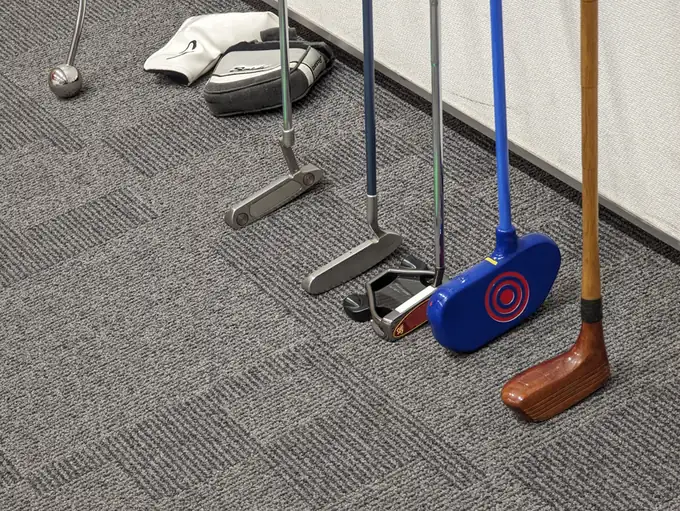
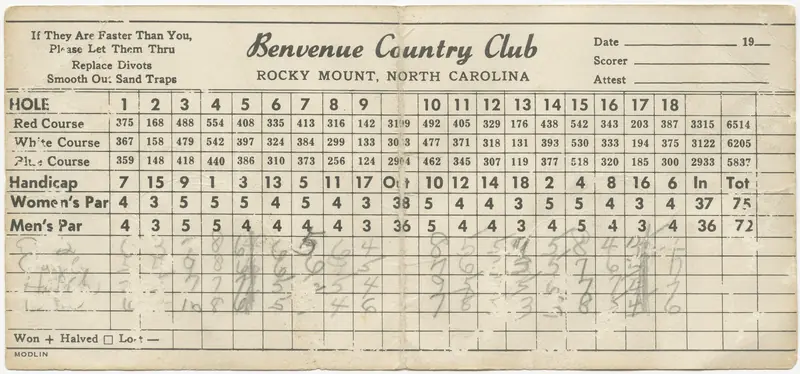
Mini golf looks like a game of luck, and sometimes it is. But the same few players seem to win every family outing, and that is not an accident. They control speed, they use the walls, and they look at a hole for a few seconds before they putt. None of that requires golf lessons. Here is how to putt better on any crazy golf course, from carpet greens to garden lawns.
Grip and stance: simple and repeatable
Hold the putter with both hands close together near the top of the grip, thumbs pointing down the shaft. Grip lightly; a tight grip makes the stroke jerky. Stand with feet about shoulder-width apart, knees slightly bent, and your eyes roughly over the ball or just inside it. The ball should sit a little forward of the middle of your stance.
The stroke comes from your shoulders rocking, not your wrists flicking. Imagine your arms and the putter forming a triangle that swings like a pendulum. Take the putter back and through the same distance. A short backswing with a long, jerky follow-through is the most common cause of balls racing past the cup.
Speed matters more than line
On most mini golf holes, the difference between a two and a four is speed. A putt that is on line but three metres too strong ends up bouncing off the back wall to somewhere awkward. A putt that is a little off line but at the right speed stops close enough for an easy tap-in.
Aim to have the ball finish about 30 to 45 cm (a foot or so) past the cup if it misses. That speed gives it a chance to drop and leaves a short return putt. Control distance with the length of your backswing, not by hitting harder. For a longer putt, take the putter back further and keep the same smooth tempo.
How to use the walls
Walls are not obstacles; they are tools. On a hole that bends around a corner, the fastest route is often off the wall rather than around it. The basic rule for a firm, straight wall is that the ball leaves at roughly the same angle it arrived, just like light off a mirror.
Real walls are not perfect. Wooden borders absorb a bit of speed, rubber bumpers add bounce, and a ball with sidespin will kick off at a different angle. Watch the first player in your group bank off a wall and adjust from what you see.
Reading slopes
Crouch behind your ball and look toward the cup. Ask two questions: is the hole uphill or downhill, and does the ground tilt left or right? On a slope, aim uphill of the cup and let gravity bring the ball down to it. The slower the putt, the more the slope will turn it, so a gentle downhill putt breaks more than a firm uphill one.
On carpet courses, look for seams, patches and dips near the cup where many feet have stood. On grass, the direction the blades lean (the grain) can slow or speed the ball slightly; shiny-looking grass usually means you are putting with the grain.
Ramps, tunnels and bumpers
- Ramps: commit to enough speed. A ball that stalls halfway rolls back to your feet, which is worse than one that goes a little long.
- Tunnels: aim at the centre of the entrance, not the cup beyond it. Once the ball is in, the tunnel does the steering.
- Windmills and moving parts: watch a full cycle, then start your stroke just as the blade clears the gap. Your ball takes a moment to arrive, so you are timing the gap, not the blade.
- Bumper clusters: go slow. Pinball-style bumpers amplify speed, and gentle putts produce more predictable bounces.
- Multi-level holes: the lower level usually has a gathering slope. Aim to get down in the right zone rather than straight at the cup.
A pre-putt routine in five seconds
Pick your target, which might be the cup, a spot on a wall or the mouth of a tunnel. Take one practice swing beside the ball with the length you intend to use. Set the putter behind the ball square to your target. Look at the target once more, then look back at the ball and stroke. Keep your head still until the ball has gone. This takes almost no time and stops rushed, careless putts.
If you want to build real touch, try the drills in putting practice games or plan a focused session with our practice session planner.
Frequently asked questions
Should I use a heavier or lighter putter for mini golf?
Most courses hand out a range of lengths. Pick one where the shaft reaches around your hip bone or slightly lower when the head is flat on the ground. Weight matters less than being comfortable enough to swing smoothly.
Why does my ball keep bouncing out of the cup?
It is arriving too fast. A ball moving slowly drops in even when it catches the edge. Shorten your backswing and aim to finish just past the cup.
Is it better to aim at the cup or a wall?
If there is a straight line to the cup, aim at the cup. If a corner or obstacle blocks the line, a bank shot is often more reliable than trying to curve around.
Does looking up early affect the putt?
Yes. Lifting your head often lifts your shoulders and pulls the putter off line. Keep your eyes down until the ball is on its way.
Play safe: swing low near people, pets and windows, and follow any posted course rules.