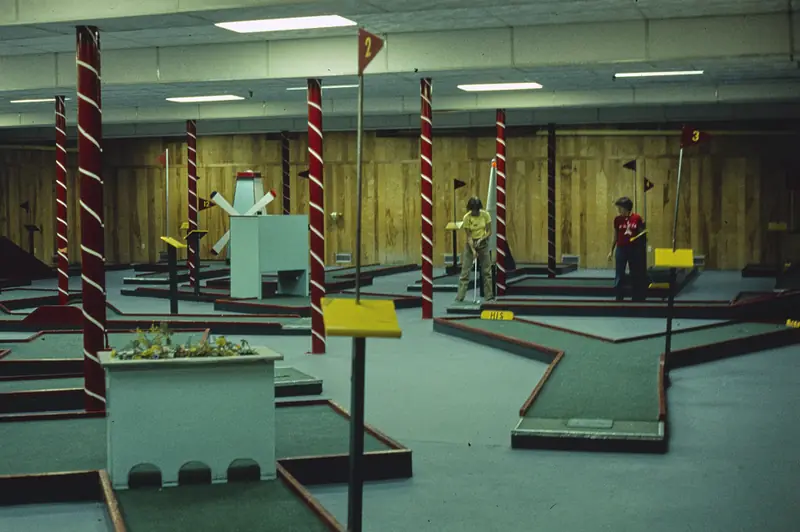
Every classic crazy golf course has a signature obstacle: the windmill, the castle drawbridge, the loop. You can make surprisingly good versions at home from the recycling bin and a trip to the shed. The trick is not realism; it is making something that changes how the ball moves and gives players a decision to make. Here are fifteen obstacles, grouped by what they do, plus notes on keeping them fair.
Obstacles that block
Blockers force players to choose a line. They are the easiest to build and the easiest to adjust.
- Book wall. Two or three hardback books standing on end with a ball-width gap between them. Slide them closer for a tougher hole.
- Shoe slalom. A line of shoes set out in a zigzag. Players weave through or bank off them. Everyone contributes a pair, which makes it an instant party hole.
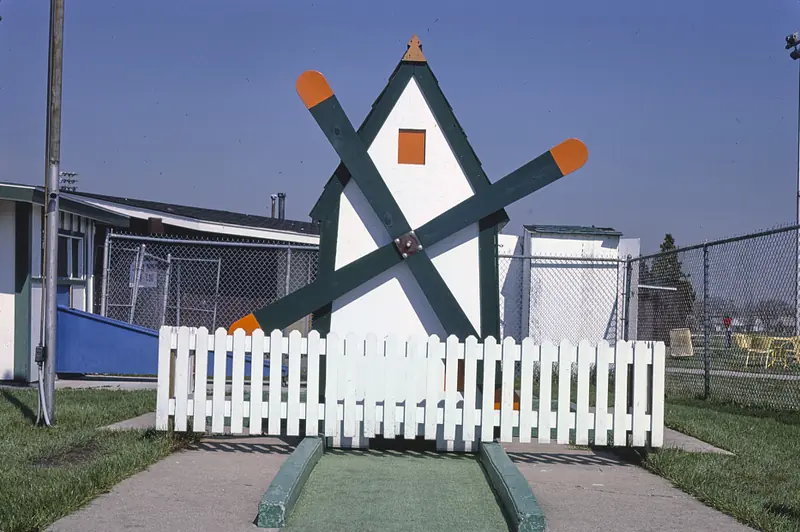
- Cardboard windmill. Cut a box into a tower shape with a doorway at the bottom. Pin four cardboard blades to the front with a split pin so they spin freely. Give it a flick before each shot and the blades may or may not block the door when the ball arrives.
- Traffic-cone gate. Two small sports cones make a gate. Put the gate slightly off the straight line to the cup so players must aim wide.
Obstacles that channel
Channels take control away from the player for a moment, which is exactly what makes them funny.
- Cardboard tube tunnel. A poster tube or wrapping-paper tube cut in half lengthwise makes a covered chute. Tape it to the floor so it cannot roll.
- Rain-gutter run. A short length of plastic gutter works as a fast straight chute and can be raised at one end to make a drop.
- Pool-noodle split lane. Slice a pool noodle lengthwise and lay the halves face down to form a narrow lane, or face up to form a half-pipe that curves the ball around a corner.
- Box maze. A shallow cardboard box with doorways cut in each side. The ball enters one door and players must guess which exit the bounce will find.
Obstacles that lift or drop
Changes in height are what make a hole feel like an adventure rather than a straight putt.
- Plank ramp. A smooth board resting on a book or brick. A shallow ramp is enough; steep ramps make balls bounce off the end unpredictably.
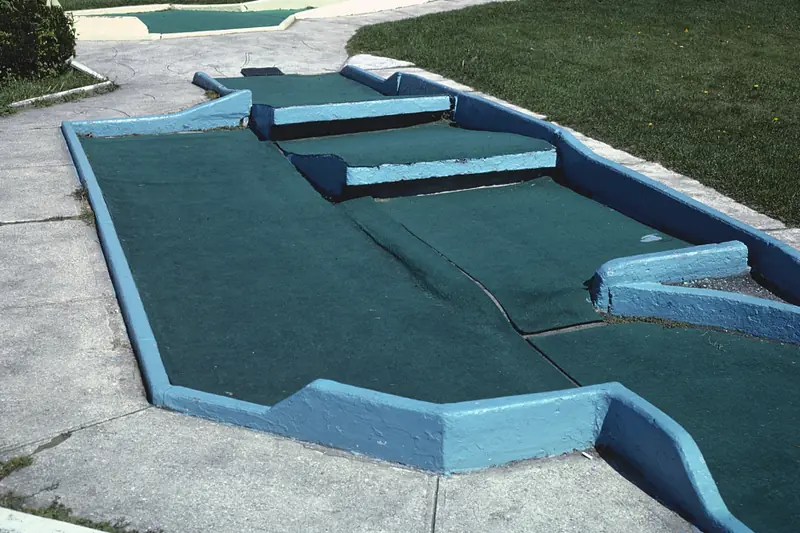
- Two-level green. Put the cup on a low platform, such as a tray on a folded towel, and add a short ramp. Players need enough speed to get up but not so much that they fly off the back.
- Bucket volcano. A bucket on its side with a ramp into the mouth. Anything inside counts as holed. Cut a paper flame for the top.
- Loop-the-loop. A strip of flexible plastic, such as a cut-up folder or thin vinyl flooring offcut, bent into a loop and taped at both ends. It takes experimenting and a firm putt, but getting a ball around a home-made loop is the proudest moment of any course.
Obstacles that bounce
- Bank board. A straight board placed at an angle so the only way to the cup is off the wall. See the diagram below.
- Pinball bumpers. Plastic cups or tins stuck down in a cluster. The ball pings between them in a satisfying and completely unpredictable way.
- Drawbridge. A piece of card hinged with tape across the front of a box castle, raised and lowered by a string that the next player in line controls. Use this one sparingly; it is chaos in the best sense.
Making obstacles play fairly
A good obstacle should be beatable with skill most of the time and a little luck some of the time. After you build one, putt five balls through it. If none get through, widen the gap or lower the ramp. If all five go in, add a twist. Tape everything down: an obstacle that slides when hit feels unfair, and players will argue about it all afternoon.
Keep a "reset line" in mind too. Decide in advance where a ball goes if it gets stuck inside a tunnel or flies off a ramp. The simplest rule is that the player places it at the exit of the obstacle and adds one stroke.
Safety and tidy-up
Use tape rather than nails indoors, keep sharp craft knife work for adults, and avoid glass jars or anything that could shatter if a ball hits it hard. Outdoors, weigh down cardboard with a stone or peg it so it does not blow into the neighbour's garden. Flat-pack cardboard obstacles and store them in a large box; the windmill will be ready for the next rainy day.
For a full layout that puts these to work, see how to build a backyard mini golf course or the indoor living-room course.
Frequently asked questions
What is the easiest obstacle to start with?
A cardboard tunnel or a book wall. Both take a few minutes, need no tools and immediately change how a hole plays.
How do I stop cardboard obstacles from sliding?
Use painter's tape or masking tape on floors, and tent pegs or stones outdoors. Put a heavier object inside boxes to anchor them.
Will golf balls damage furniture or walls?
A firmly struck golf ball can mark soft surfaces. Indoors, consider foam or plastic practice balls and keep holes away from glass and fragile items.
How many obstacles should one hole have?
Usually one main feature. Two can work on a longer hole, but more than that tends to make the hole slow and frustrating.
Play safe: swing low near people, pets and windows, and follow any posted course rules.