Gear for Casual Golfers: What Is Worth Owning for Fun Golf

You do not need much to enjoy fun golf. Mini golf courses lend you a putter and a ball, and a backyard course can be built from things you already own. Still, a few pieces of gear make practising at home easier and your own course more fun. This guide covers the main categories, what to look for in each, and what you can safely skip. We do not rank specific products; instead, here is how to choose well for your situation.
Putters: fit beats features
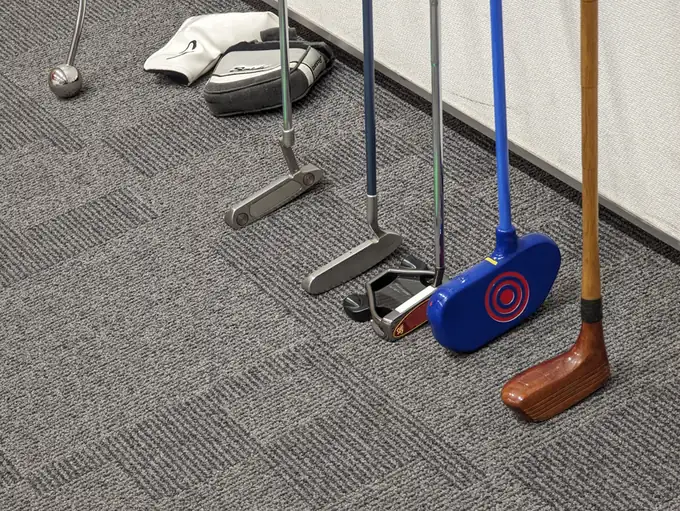
If you buy one piece of golf equipment for fun play, make it a putter. The most important thing is length. When you stand in a comfortable putting posture with your eyes roughly over the ball, the putter should rest flat on the ground with your hands hanging naturally. For many adults that is somewhere around 33 to 35 inches, but height and posture vary, so try a few if you can.
Putter heads come in two broad shapes:
- Blade putters are narrow and traditional. They give lots of feedback and suit players with a slight arc in their stroke.
- Mallet putters are larger, often with alignment lines. They tend to be more stable on off-centre hits, which many beginners find forgiving.
Children need their own length. A child using an adult putter will stand too far away and swing awkwardly. Junior putters and adjustable-length models exist for exactly this reason.
Balls: brightness and purpose
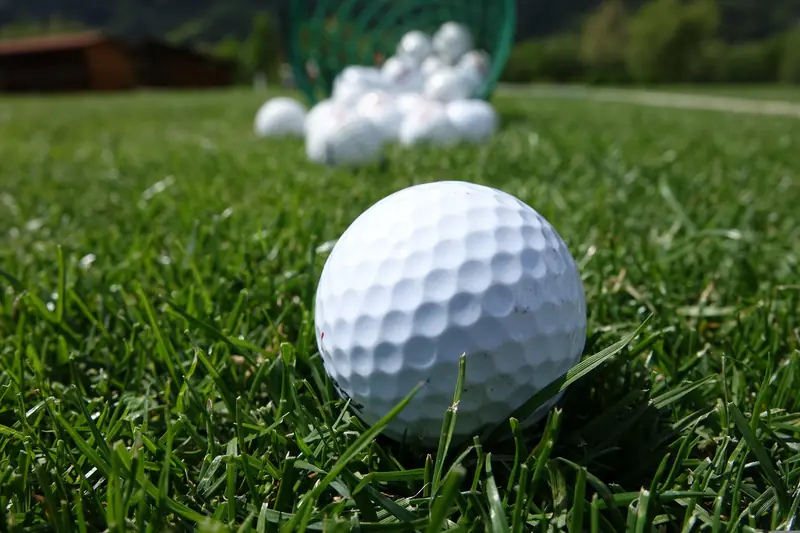
For garden and home play, bright coloured balls are easier to find in grass and flower beds. Budget or recycled balls are perfectly fine for putting. For indoor play or around small children, foam and soft plastic practice balls are safer, though they roll less true. Glow-in-the-dark balls, typically charged with a torch or containing a small light, are a fun addition for evening garden rounds.
| Ball type | Best for | Trade-off |
|---|---|---|
| Standard golf ball | Lawns, putting mats, real greens | Hard; can mark indoor surfaces |
| Coloured golf ball | Backyard courses, spotting in grass | Same hardness as standard |
| Foam practice ball | Indoors, young children | Light, affected by bumps and draughts |
| Plastic practice ball | Indoor putting and gentle chipping | Rolls less smoothly than a real ball |
| Light-up or glow ball | Evening garden rounds | Needs charging or batteries |
Putting mats and practice aids
A roll-out putting mat gives you a consistent surface indoors. When comparing mats, look at length (longer mats allow lag practice), whether there is a ball return at the end, and how the surface compares to a real green. Many mats are faster or slower than turf, so treat them as a way to groove your stroke rather than an exact replica.
Simple aids go a long way. Two tees make a gate, a coin makes a target, and a mirror on the floor shows whether your eyes are over the ball. Before buying a specialist gadget, try the games in putting practice games; most need nothing but a few household objects.
Backyard mini golf kits
Pre-made backyard kits usually include portable cups, flags, and sometimes flexible borders or small obstacles. They are convenient and pack away neatly. When choosing, check whether cups are designed for grass or hard surfaces, whether flags are sturdy enough for wind, and whether the kit includes enough holes for your space. Many families combine a basic kit with homemade obstacles, which gives the best of both. Our backyard course guide explains how.
Bags, storage and the day out
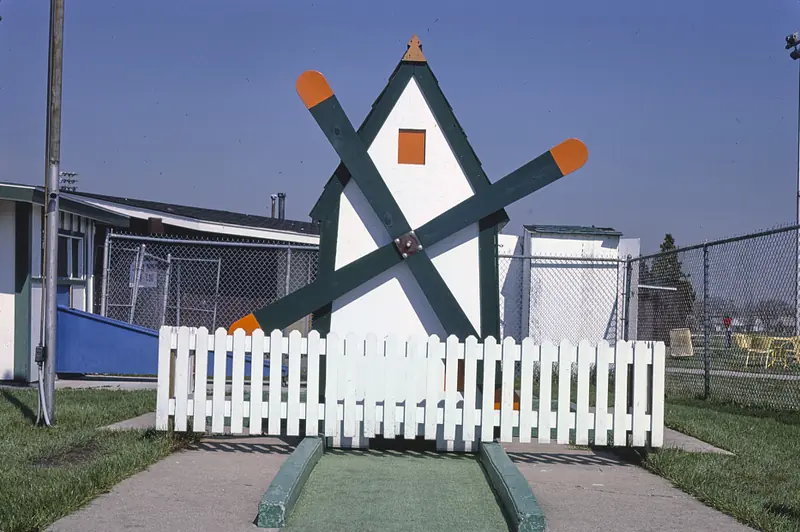
For mini golf and putting practice you only need something to keep balls, tees and a putter together; a tote or a simple pencil-style carry bag is plenty. A small storage box for homemade obstacles keeps cardboard windmills flat and dry between uses. For a day at a pitch-and-putt or par-three course, a lightweight carry bag with a stand is more comfortable than a large cart bag.
For outdoor days that stretch into evenings, think about comfort gear too: a water bottle, sun protection, a light layer and a small blanket for watching the rest of the group play.
What you can skip
- Expensive premium balls for putting and mini golf. A basic ball rolls well on a short putt.
- Golf shoes for mini golf. Comfortable trainers are ideal.
- Gloves for putting. Most players putt without one.
- Large gadget kits with many single-use aids you will not use twice.
- Buying a full set of clubs before you know you enjoy regular golf. Many driving ranges and par-three courses rent clubs.
Where a category above has a partner pick, it is marked #ad and the link is labelled. For seasonal ideas sorted by budget, see our Crazy Golf Gift Guide 2026 (#ad). Nothing in this guide depends on buying anything.
Frequently asked questions
What length putter should I buy?
Choose a length that lets you stand comfortably with your eyes roughly over the ball and your arms hanging naturally. For many adults that is roughly 33 to 35 inches, but trying a few is the best test.
Are cheap golf balls fine for putting?
Yes. For putting and mini golf, differences between balls matter much less than on full shots. Pick something bright and easy to find.
Is a putting mat worth it?
If you want to practise regularly at home, a mat gives a consistent surface. If you only play occasionally, carpet and a mug work well enough.
Do kids need their own putter?
It helps a lot. A putter sized to the child makes a comfortable stance possible and makes the game much more enjoyable.
Play safe: swing low near people, pets and windows, and follow any posted course rules.